Golf Canada
-
Golf Search
Course Reviews Course Guide Ontario Golf British Columbia Golf Alberta Golf Golf Packages
-
Predator RidgeARCHITECTURE

Western Canada
is fertile territory
for Les Furber

By Joel Zuckerman,
Staff Writer

KELOWNA, BRITISH COLUMBIA (Nov. 13, 2004) - Although newcomers such as Tom Doak and the team of Ben Crenshaw and Bill Coore have made tremendous inroads in the last decade, "The Big Three" of American golf course architects remain Pete Dye, Tom Fazio and Rees Jones.

Related Links

Americans' neighbors to the north have a "Big Four" of their own, and while Tom McBroom, Doug Carrick and Graham Cooke ply their trade predominantly in Canada's eastern provinces, Les Furber thinks the West is best.

Furber is based in Saskatchewan, and his innovative designs are sprinkled throughout his home province, and more notably, a bit further west in British Columbia. The 58-year-old has been on his own for almost 25 years but his long association with Robert Trent Jones prior to that has laid the foundation for what's been a noteworthy career. Here Furber provides some background information on his history and philosophy to an audience of mostly-American golf enthusiasts who are unfamiliar with his name. Learn a bit about one of the continent's most accomplished architects you've never heard of.

Belmont Golf CoursesTell us about working with Robert Trent Jones:

I worked with him from 1966 to 1980 before going out on my own. Between 1968 and 1978 I was mostly overseas, either in Europe or South America. Some of the highlights included 45 holes commissioned by the King of Morocco, where we produced a world-class course called Dar Es-Salam. On the south coast of Spain we did Valderrama, site of the 1997 Ryder Cup Matches. At that time I was involved primarily on the construction side, which is how I came up in the business. The Geneva Golf and Country Club in Switzerland, and the Pevero Golf Club on the island of Sardinia are a couple of other of our high profile creations.

What were some of the lessons you learned from Jones?

He taught me to make my courses visual in nature. People best appreciate what they see, not what they know or think they know. He also taught me what not to do. Don't tighten up the entrances to greens. Don't bunker greens too tightly, or put too many severe contours on the putting surfaces. For all the championship courses he produced, he was very concerned with how a course would play for the average golfer.

He didn't teach you too much about self-promotion, though. Very few golfers in the States have heard your name. Tell us about some of your best-known work.

That maybe so but I'm one of the four best known architects in Canada and my calling card is my work in the western part of the country. I've done more than 30 courses in British Columbia alone. Some of the better known ones include Predator Ridge in Vernon, B.C. Salmon Arm in the town of the same name, SilverTip, right here in Canmore, Alberta, which is where my offices are located. SilverTip is on a mountainside with more than 600 feet of elevation change.

Wow.

That's exactly what people say when they play it.

How about in the eastern provinces?

Back east, Glasgow Hills on Prince Edward Island might be my best known course. The long views of the Gulf of St. Lawrence make this course quite memorable.

What about in the U.S.?

Not too much as of yet, though I've recently completed a course in Missoula, Mont., called Phantom Links. It should be nominated under the category of "Best New Affordable," because it's only about $36 to play. I hope to work in the U.S. more in the future.

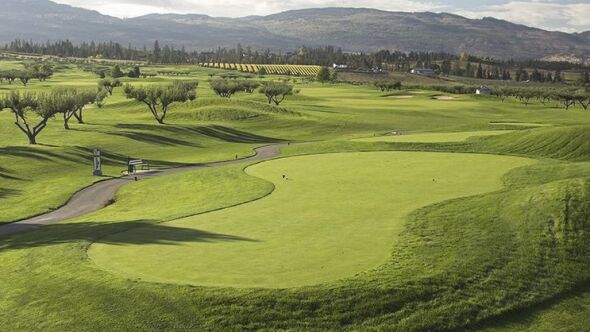
I was very impressed with a recent visit to magnificent Predator Ridge in the Okanogan Valley of British Columbia. It's a massive, 1,200-acre property, formerly a rangeland a mile wide and two miles long. Tell me about it.

My goal there was to fit the best holes into the terrain in the most natural, yet spectacular way. There was no attempt to try and accommodate housing. I had studied the site carefully over years and though only 27 holes are in play currently, there are plans in place for an additional nine, which will give us two separate 18 hole facilities.

It's not very conducive to walking though.

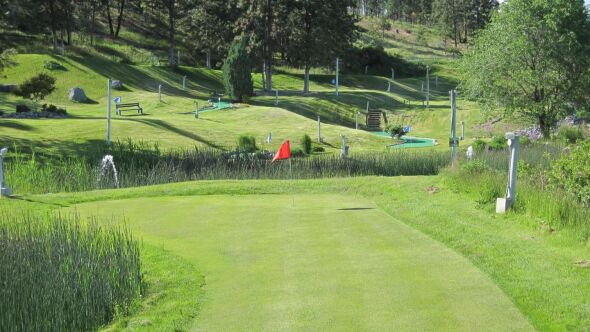
Meadow GardensIt's not quite an alpine golf course but it's an upland, parkland-style course. My philosophy is that if a player needs to walk a bit to get to a certain elevation to get to a memorable tee shot, then it is well worth it. You might be a bit tired but you get to play a great hole when you get there. I'll always err on the side of making a great hole, versus compromising the terrain to make it walker friendly. I've worked on dead-flat terrain where you're only as good as your imagination and there's more consideration given to the intimacy of the course routing. But in rugged terrain I concentrate on producing dramatic holes, great holes, good, strong golf as it should be. I don't worry about the distances between green and tee. For the sake of not walking, I don't want to play an ugly hole. It's only a small percentage of players who walk these days anyway. It's usually younger folks, purists, strong players, who want the walking option, and they are a small percentage of the market. The irony is that I've played many courses in the States that were easily walked, yet they had a mandatory cart policy!

Tell me about another wonderful course in the Okanagan Valley, called Gallagher's Canyon.

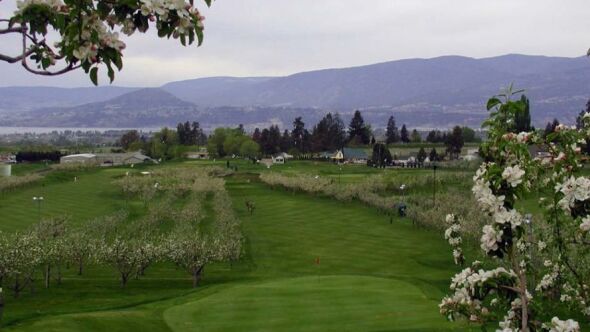
This was originally a Bill Robinson design from 1980. I came in about 15 years later and redesigned some holes because the housing became more prevalent. The owners wanted to maintain the woodland experience that gave the course its wonderful feel but accommodate the residential community that was growing in around it. I've redone about 14-15 holes there and totally rebuilt about four holes on the northwest corner of the property, an area that meanders away from the housing and moves towards the fruit orchards. The third through the seventh are the holes that I implemented when I went to work there in the mid-90s.

Tell me about The Quail Course at the Okanagan Golf Club. It's a bit tight and quirky, don't you think?

It's a favorite of the members there, who apparently prefer it to The Bear course on site. People like the contours and the demands of the course. The sister course, done by the Nicklaus Design Group, was flattened just a bit, and widened. I followed the terrain that was already there, and its more natural. It's the tougher test of the two. You need to play The Quail more than once to really enjoy it. Landing areas can be tight and you need to work the ball in both directions to find the proper part of the fairway for your best approach shot in. It was a great piece of land and I think The Quail is a good complement to The Bear, which most people consider a bit easier to play.

You're the main man in the Okanagan. What attracts you there?

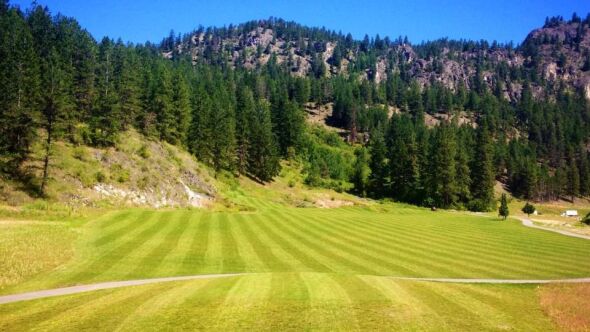
The SalmonThe climate is fantastic. It's fairly dry, the wine region offers another asset. But I'm really attracted to the topography. I love the ruggedness of the terrain there. I guess I specialize in alpine golf. My overseas projects right now are in Switzerland and the Czech Republic, which are equally rugged in nature.

Tell me in conclusion about your feelings for Stanley Thompson, the dean of Canadian golf course architects.

"The Big Four," as you refer to us, all owe a debt to Stanley Thompson and all have an association in one way or another. He's a hero to all of us. My old boss Robert Trent Jones had a partnership with Mr. Thompson, so I have an affiliation. Doug Carrick in particular does lots of renovation work on Thompson courses because he's based in the east, which is where many of his designs are located.

I consider him a man before his time. He was doing rabbit's foot-type bunkering, with jagged edges and flashed faces 60 and 70 years ago. Trent Jones and many others that followed copied his style. He was like the Pete Dye of his era, with lots of imagination. He had the best clients because he excelled at what he did. There were plenty of long walks from green to tee on his courses but when you got there, you played a great hole. And this was before there were golf carts! I guess you would call it the ultimate walk in the park.

Any opinions expressed above are those of the writer and do not necessarily represent the views of the management. The information in this story was accurate at the time of publication. All contact information, directions and prices should be confirmed directly with the golf course or resort before making reservations and/or travel plans.


Readers Tee Off
Post a comment
WIN Free golf lessons with Butch Harmon!
Win a free golf book!

DEPARTMENTS

  Home
Advertise Here
Be a course reviewer
Course Reviews
Course Guide
Feature Stories
Photo Galleries
Reader Reviews & Letters to the Editor
Golf Packagers


WorldGolfWire.com


CANADA INSIDER

  Golf Packages
Accommodations
Transportation
Things to Do
Travel Tips & FAQ
Tour Operators

DESTINATION GUIDES

  Alberta
Banff
British Columbia
Okanagan
Vancouver
Vancouver Island
Whistler
Ontario
Muskoka
Niagara
Toronto
Quebec


Free Canada
Package Quote

We can help you
find the best deals!
-

British Columbia Package Quote

Best courses, hotels to choose from!
-
-
-
-

GolfPublisher.com